

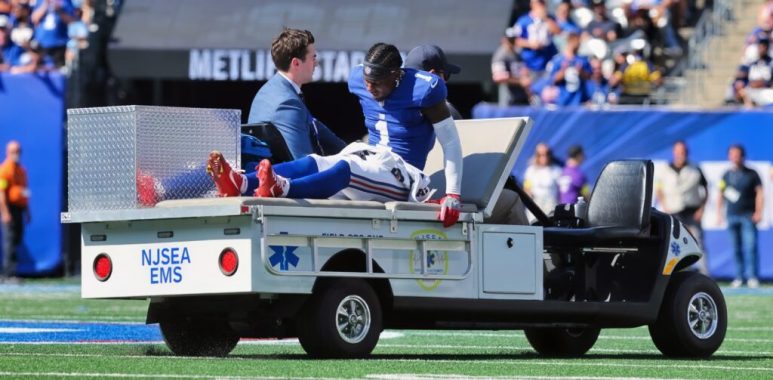
NFL Releases Groundbreaking Research On Artificial Turf’s Injury Rate, And It Changes Everything We Thought We Knew
This article was originally published on Total Pro Sports.

NFL players and analysts have complained about the potential risks the stars of the game face when they play on artificial turf. Many have blamed those as the reason why some players have popped their Achilles, such as Aaron Rodgers in 2023, and have suffered other serious injuries.
The New York Jets were under fire for this, as multiple players criticized the team for prioritizing profit over the players’ health. Almost 60 years after the Houston Oilers debuted the artificial turf, the league faces a problem, as more players criticize that surface.
A study published in 2024, with data from the 2021 and 2022 NFL seasons, concluded that “athletes were more likely to get injured on artificial surfaces and that artificial turf dramatically increased the likelihood of sustaining a serious injury requiring surgery.”
The league, however, offered new evidence that supports that artificial turf doesn’t increase the risk of injury. Judy Battista of NFL.com shared the league’s injury rate on artificial surfaces compared to natural grass on Friday.
The NFL says the injury rate on artificial surfaces is statistically the same as on grass fields. Injury rate is .43 on artificial surfaces, .42 on grass.
— Judy Battista (@judybattista) January 30, 2026
NFL Downplays Claims That An Electrical Substation Has Increased Injuries In 49ers Players

Besides the artificial turf discussion, the NFL also touched on the viral claim that says the San Francisco 49ers suffered more injuries in 2025 due to the proximity of their practice field to an electrical substation. Dr. Allen Sills, the NFL’s Chief Medical Officer, doesn’t think the substation is an issue.
“I would tell you that I’m not familiar with anything in the sports medicine literature that supports those associations, but I would also tell you that injury causation is really complex,” Sills said. “If you think about biology and medicine, you don’t have usually one single factor that drives biological systems.
“And so when we think about injury causation, whether it’s lower extremity strains or ACL or concussion . . . it’s equipment, it’s training, it’s prior injury history, its exposure, it’s play type. There’s so many things that go into that. And so, I think it’s very rare in a biological system that you’ll see one factor that really drives an injury risk.”
Sills added that sometimes people use publicly-available data sources to try to back their claims, but in this case, it wasn’t factual.


