

12 NFL Players Who Came Back From Injuries That Looked Like The End
This article was originally published on Total Pro Sports.
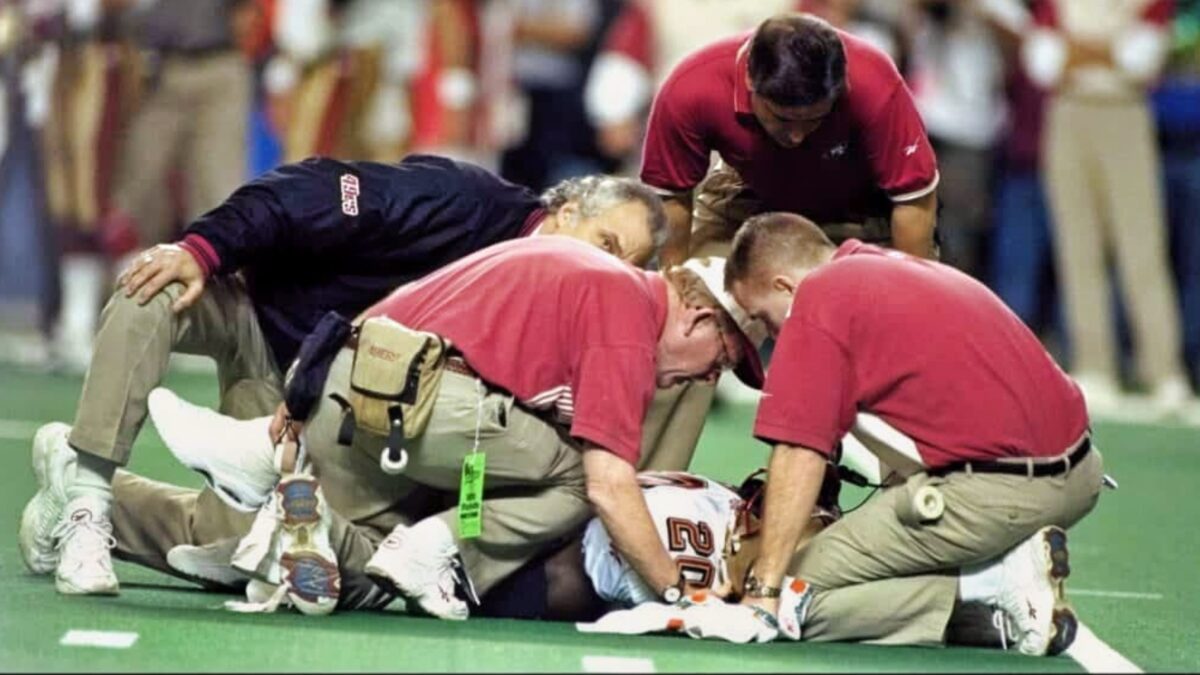
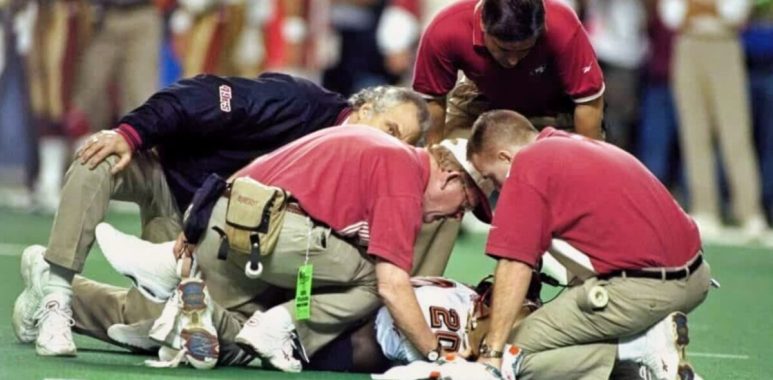
Football is a violent sport. Today’s players are unbelievable physical specimens who are bigger, stronger, and faster than their predecessors, and when they make contact, they can inflict massive damage. Serious injuries are common, but what is more remarkable is the ability of these NFL athletes to return from them. Let’s look at 12 NFL players who suffered devastating injuries but were remarkably able to return to the gridiron.
Which NFL players got back into action after suffering terrible injuries?
Damar Hamlin – Buffalo Bills
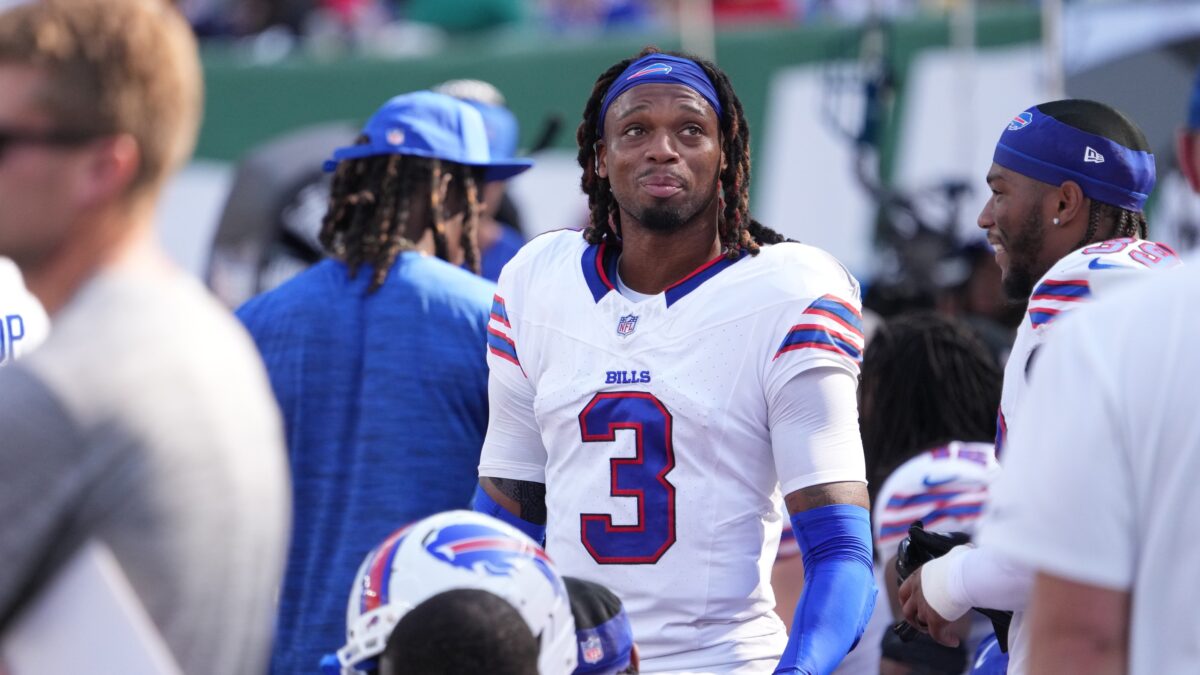
One of the easiest selections to make for this list. Hamlin was drafted by the Bills in the 6th round of the 2021 Draft. He appeared in 14 games during his rookie year but did not start any games. The 2022 season saw Hamlin earn a starting job in the Buffalo secondary. A career-altering incident occurred on a January night in 2022.
During a Monday Night game against the Bengals, Hamlin suffered a cardiac arrest. After making what appeared to be a routine tackle, Hamlin stood up and then collapsed. Medical officials tended to him on the field, restored his heartbeat, and took him to the hospital. Hamlin was diagnosed as suffering from a condition where a blunt impact to the chest at a certain moment in the heart’s electrical system stops its rhythm.
Amazingly, on April 18, 2023, Hamlin was medically cleared to return to the NFL. The question was, would he? Most people would’ve understood if Hamlin walked away from the NFL, considering the serious nature of his injury, but he returned to play in 5 games in 2023. In 2024, Hamlin returned to his starting role.
Frank Gifford – New York Giants
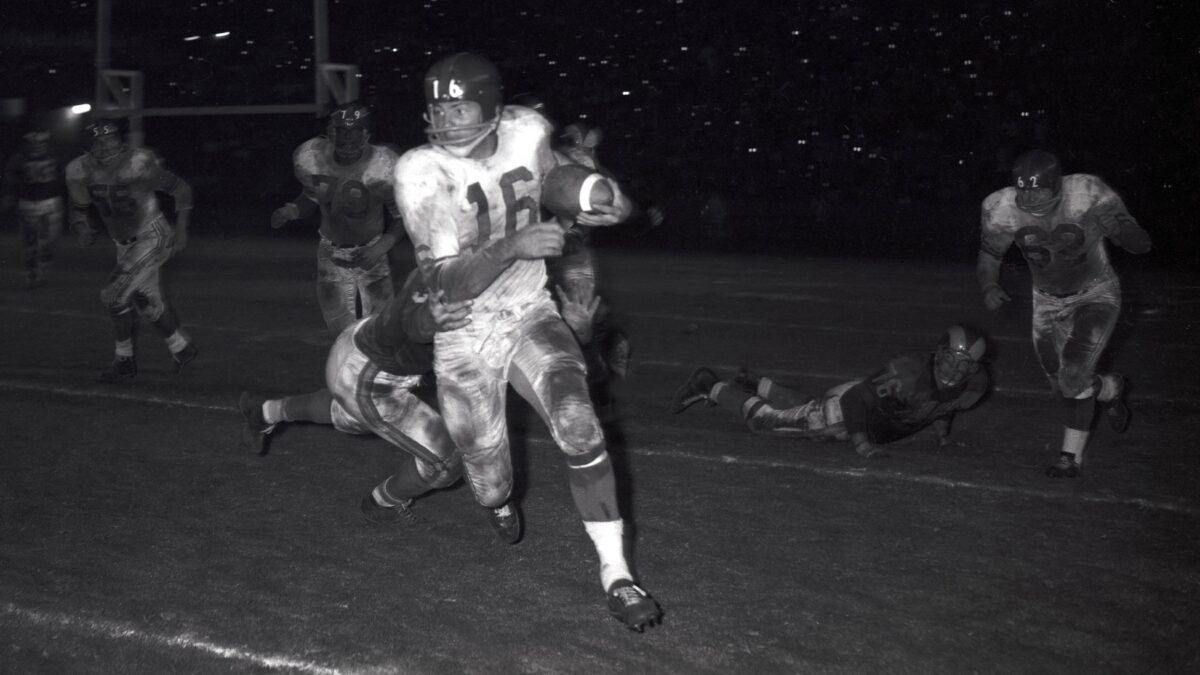
Even without the long, successful broadcasting career, Frank Gifford was a star. Over a 12-year career, Gifford was a 1st round draft pick, named to 8 Pro Bowls, was a 4x All-Pro, a Super Bowl champion, a member of the All-1950’s team, and a member of the Pro Football Hall of Fame. But all of that might not have happened if a 1960 injury had its way.
The 1960 season saw the halfback providing his usual production to the New York Giants, but during a game against Philadelphia, Gifford took a hit that probably should’ve ended his career. Eagles linebacker Chuck Bednarik leveled Gifford, and the unconscious player needed to be stretchered off the field. The Giants’ halfback would miss the rest of the 1961 season with a spinal concussion.
Despite the seriousness of his injury, Gifford returned to the field for the 1962 season. He would continue to play for the Giants for 3 more seasons, earning another Pro Bowl nomination and playing in 2 more NFL title games.
Rocky Bleier – Pittsburgh Steelers
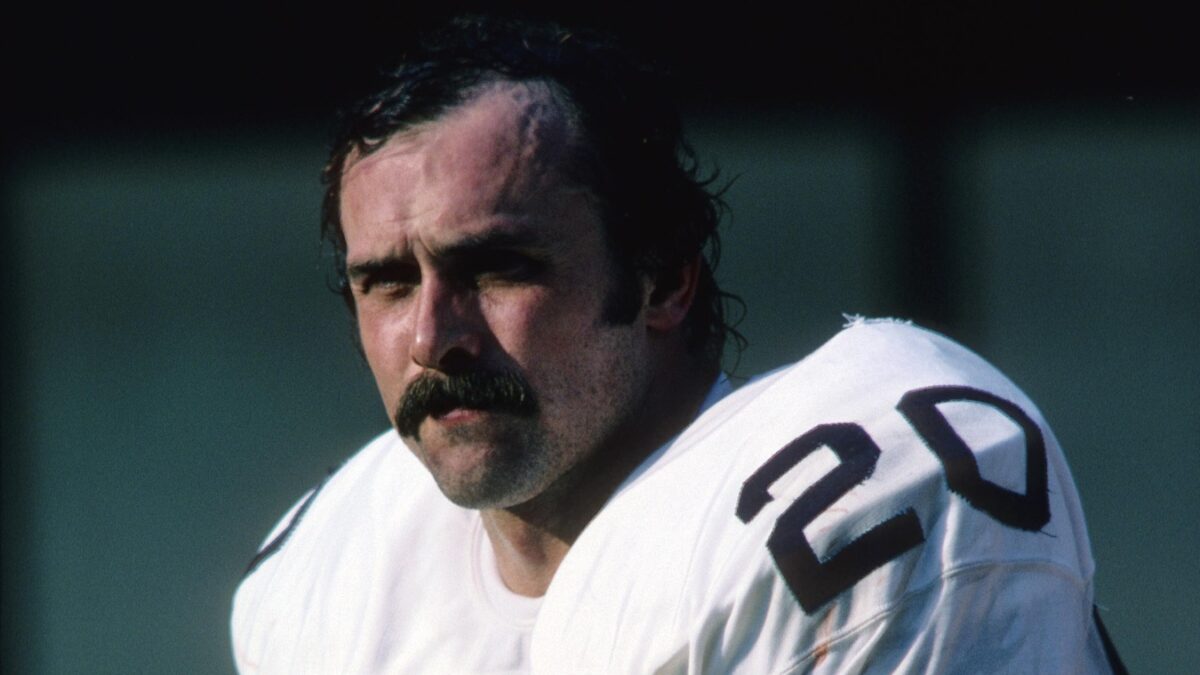
While most of the NFL players on our list suffered injuries on the field of play, Rocky Bleier’s injury was the result of an off-the-field incident. Bleier was drafted by the Steelers in the 16th round of the 1968 Draft. He was used sparingly during his rookie year, appearing in 10 games but only carrying the ball 6 times for 39 yards. Bleier’s rookie year was cut short when he received his military draft notice late in 1968.
It was during his service in the Vietnam War that Bleier incurred his gruesome injuries. While facing down enemy fire, the running back was shot in his left leg. As if being shot in the leg wasn’t horrifying enough, later that same day, an exploding grenade resulted in his right leg being hit with shrapnel.
The injuries were so severe that leg amputation was a topic of discussion. But in 1971, after 2 seasons away, Rocky Bleier returned to play for the Steelers. He continued to play for 10 more seasons in Pittsburgh, including being a member of the Steelers 4 Super Bowl championships in the 1970’s.
Alex Smith – Washington Commanders
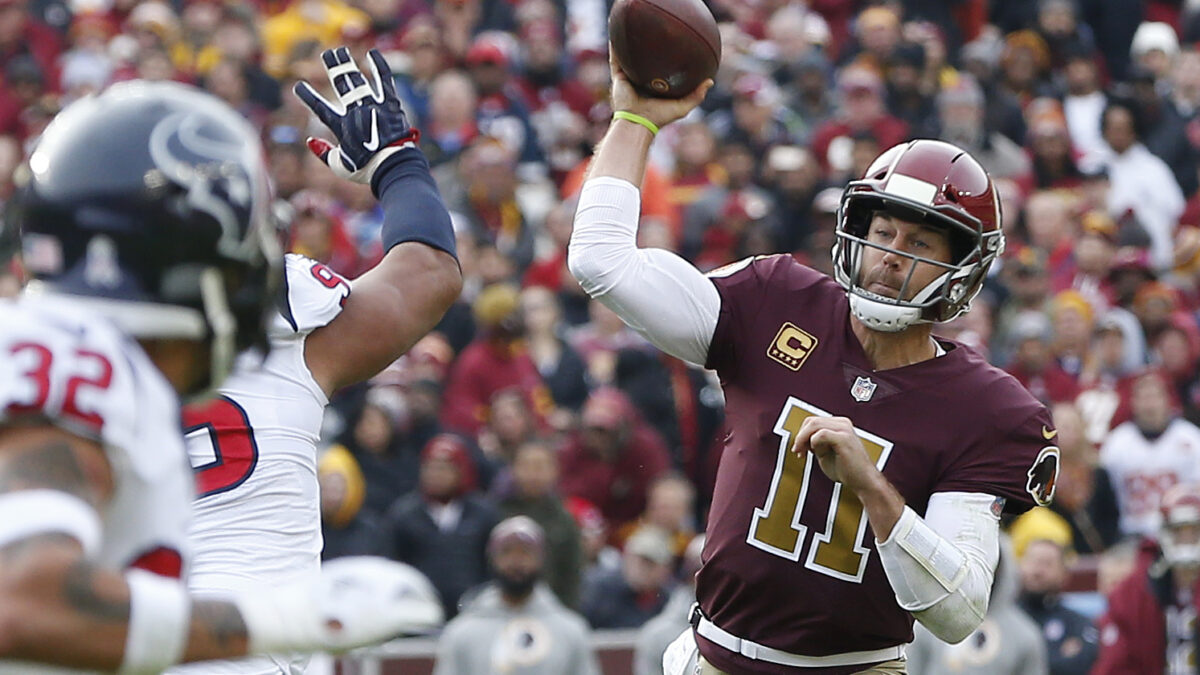
Alex Smith was picked 1st overall by the San Francisco 49ers in the 2005 Draft, but unfortunately never lived up to that hype. That’s not to say that Smith was a bad quarterback. Quite the opposite. Smith would play in 3 Pro Bowls and end his career with over 35,000 passing yards and 199 touchdowns.
Smith was a very good quarterback, just not on the level for a number 1 overall pick. Injuries may have played a part in that. Smith first missed the entire 2008 season with a shoulder injury, but it was his injury in 2018 that almost ended his career. During a game against the Texans, Smith suffered a spiral and compound fracture to his tibia and fibula.
After the surgery, Smith developed a flesh-eating disease and sepsis in the injured leg that required 17 surgeries. Amputation was discussed. He would miss the entire 2019 season before returning for 6 games in the 2020 season. After suffering a leg bruise in that 2020 season, Alex Smith decided to permanently retire from the NFL.
Peyton Manning – Denver Broncos
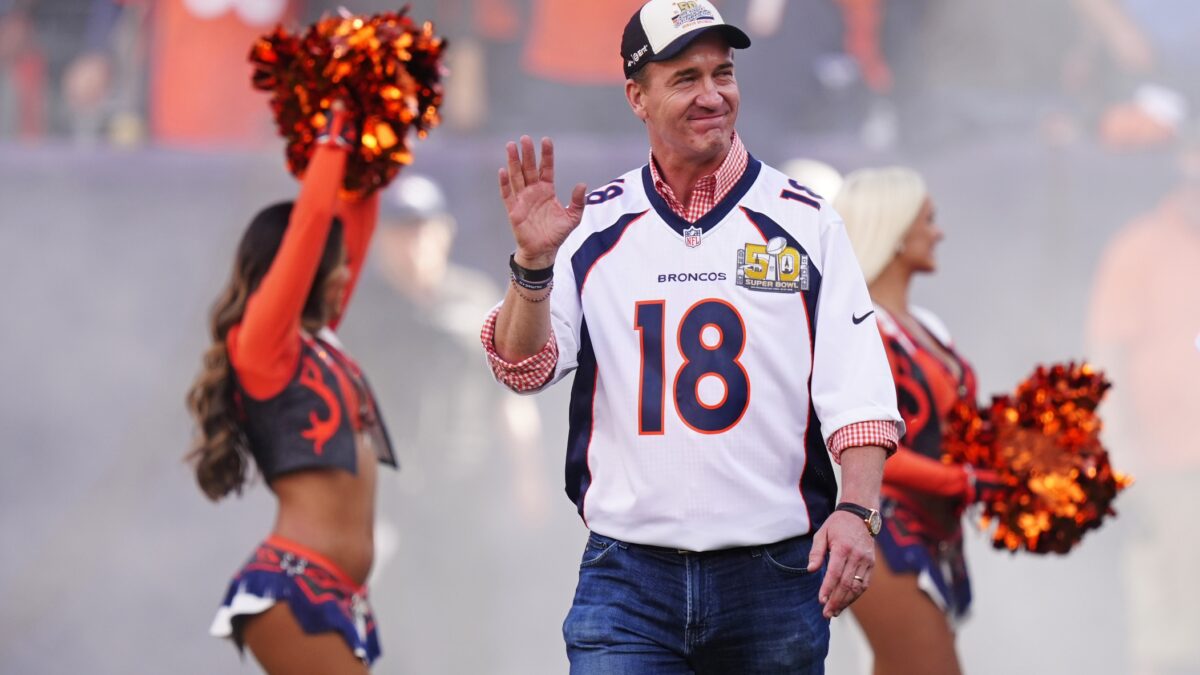
If you were to make a list of the all-time greatest quarterbacks in NFL history, a realistic argument could be made for Peyton Manning. Drafted first overall by the Colts in 1998, Manning went on to have one of the most decorated careers in the NFL. Among his numerous accolades, he was named to 14 Pro Bowls, was a 7x All-Pro, a 5x AP MVP, a 2x Super Bowl champion, Super Bowl XLI MVP, had almost 72,000 yards passing, 539 touchdowns, and a Hall of Fame induction in 2021.
Manning had one of the most remarkable runs of longevity to start a career, having not missed a start over his first 13 seasons in the league – a staggering run of 208 straight starts. But in 2011, as a result of a lingering pain and weakness in his neck, Manning missed the entire season. The 2012 NFL season saw the star quarterback in an unusual place, coming back from injury and playing for a new team. With the Broncos, Manning would go on to play 4 more seasons, making 3 of his 14 Pro Bowl selections, and winning his 2nd Super Bowl in 2013.
Gale Sayers – Chicago Bears
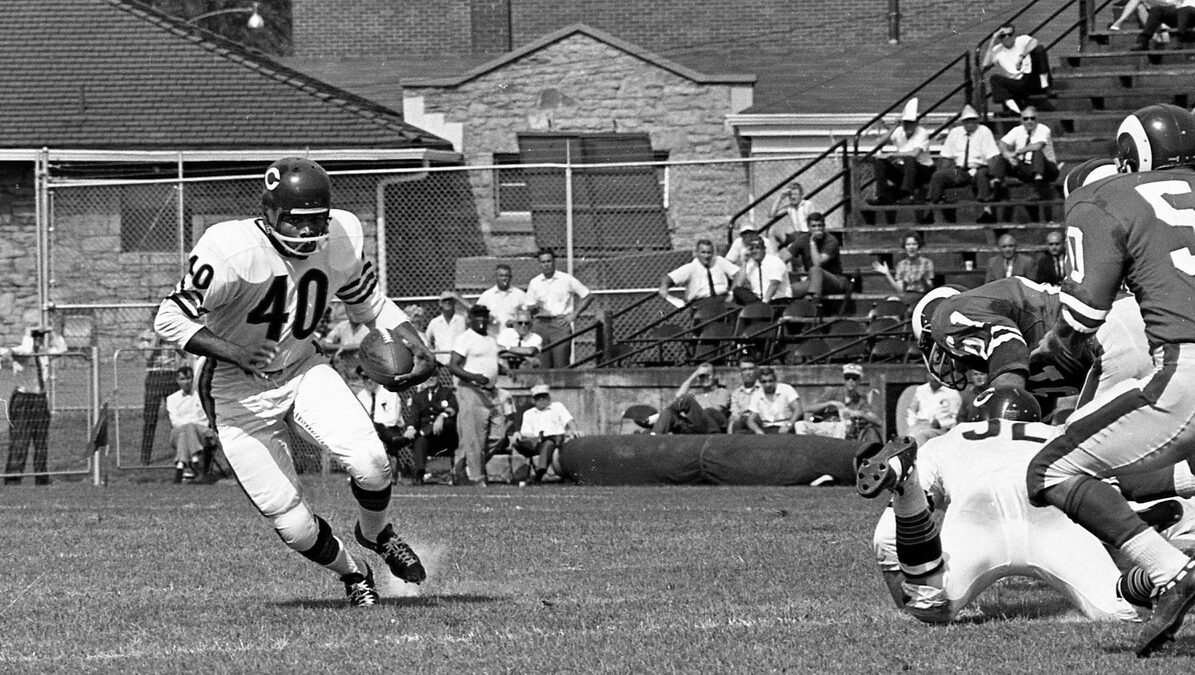
Even with the advances of modern medicine, I’m sometimes amazed at professional athletes’ ability to return from serious injuries. What’s even more amazing is that athletes from decades ago came back from serious injuries while playing in the dark ages of modern medicine. Gale Sayers was drafted by the Bears as the 4th overall pick in the 1965 Draft (he was also drafted 5th overall by the Chiefs in the 1965 AFL Draft).
Sayers rushed for 867 yards and 14 touchdowns in his rookie season, but he was able to surpass 1,200 yards in his sophomore season, winning his first rushing title. Unfortunately for Sayers, his 1968 season was cut short when he tore his ACL, MCL, and meniscus. Those are injuries that could derail an athlete’s career in 2026; forget about the damage they would cause in 1968.
Sayers was determined, rehabbed hard, and returned to the Bears’ backfield in 1969, where he won his second league rushing title. Despite the comeback in 1969, Sayers only played in 4 combined games over the next 2 years before another knee injury ended his career.
Garrison Hearst – San Francisco 49ers
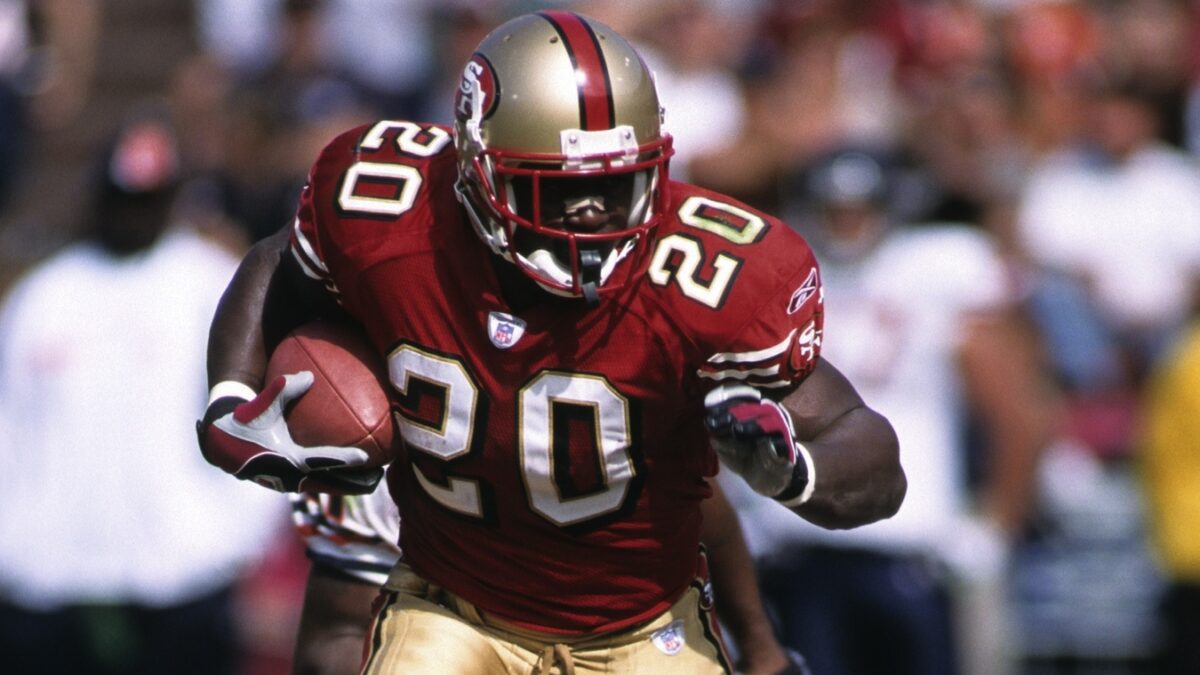
A first-round draft pick (3rd overall) by the Cardinals in 1993, Garrison Hearst had all of the tools to be a star. His first two years in the league were nothing special, as he rushed for a combined 433 yards with 2 touchdowns on 113 carries. But in his 3rd year, Hearst began to show what he was capable of, finishing the 1995 season with over 1,000 yards rushing.
After a disappointing 1996 with the Bengals, Hearst made his way to the San Francisco 49ers for the 1997 season. His first year in San Francisco saw the running back once again break the 1,000-yard rushing barrier, but in 1998, Hearst completely broke through. In 1998, Hearst surpassed 2,100 scrimmage yards, 1,570 of them rushing the ball. Against the Falcons in the playoffs that year, Hearst broke his ankle.
Surgical complications led to Hearst missing two years of playing time with avascular necrosis – a condition that affects blood flow to his ankle. Despite the simple task of walking being difficult, Hearst returned to the 49ers in 2001 and once again surpassed 1,000 yards rushing. He would continue to play through the 2004 NFL season despite his injury.
Tim Krumrie – Cincinnati Bengals
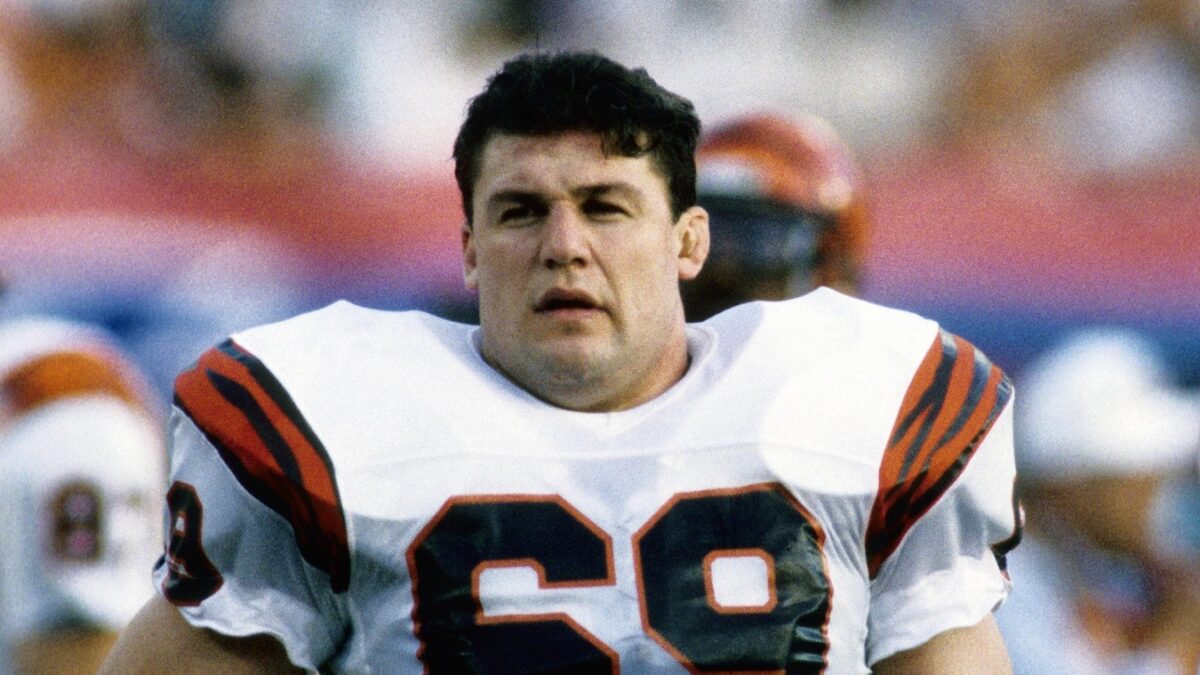
This is one of those injuries that I remember watching live. Of course, anyone old enough to remember watching Super Bowl XXIII will remember watching this injury. But let’s start at the beginning. Tim Krumrie was drafted by the Cincinnati Bengals in the 10th round of the 1983 Draft. By 1984, his second season, Krumrie was already a starting member of the defensive line. He would earn 2 Pro Bowl selections and was named an All-Pro in 1988.
In fact, 1998 would be the season that the Bengals made it to just their second Super Bowl appearance, and Krumrie’s 152 tackles with 3 sacks certainly contributed to the team’s success. However, against the 49ers in Super Bowl XXIII, Krumrie suffered a gruesome injury to his leg.
Breaking his leg in two places, viewers were able to see the defensive lineman’s ankle flopping in the breeze. Remarkably, after surgery to install a metal rod, Krumrie returned to the Bengals for Week 1 of the 1989 season and played until 1994.
Joe Montana – San Francisco 49ers
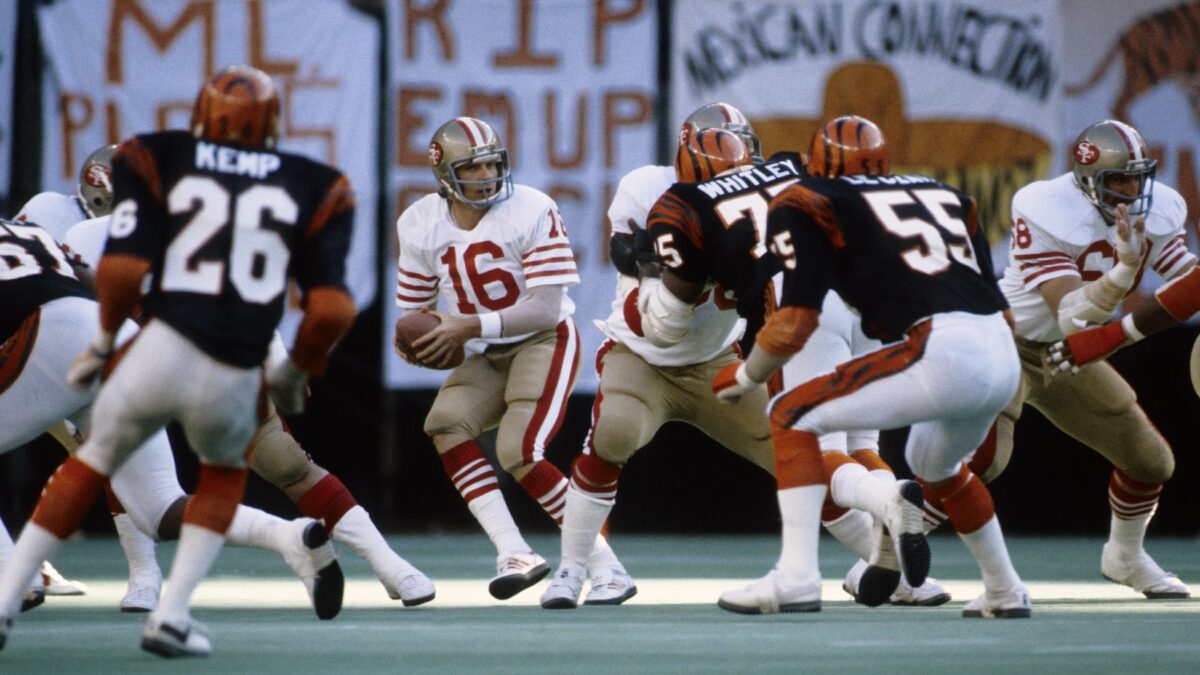
The accolades for Joe Montana are plentiful, among them being an 8x Pro Bowl selection, 3x All-Pro, 2x MVP, 4x Super Bowl champ, 3x Super Bowl MVP, induction into the NFL Hall of Fame, and being the only player who is actually deserving of two separate entries on our list. Injuries almost derailed Montana’s decorated career, not once, but twice.
In 1986, the 49ers quarterback suffered a ruptured disk in his lower back, which required surgery. He returned later that same year, only 56 days after his surgery. Despite his quick recovery, based on the seriousness of the surgery, Montana’s recovery was considered a miracle. As if overcoming one major injury wasn’t enough, Montana was faced with another surgery in 1991.
During the NFL pre-season, Joe Cool suffered a severe elbow injury and needed to have his tendon reattached. In 1992, he was forced to endure another surgery on his elbow. The elbow injury led the 49ers to trade Montana to Kansas City, where he played for another two seasons. In fact, his time in KC wasn’t spent going through the motions, as he earned a Pro Bowl nod and two playoff wins.
Orlando Brown – Baltimore Ravens
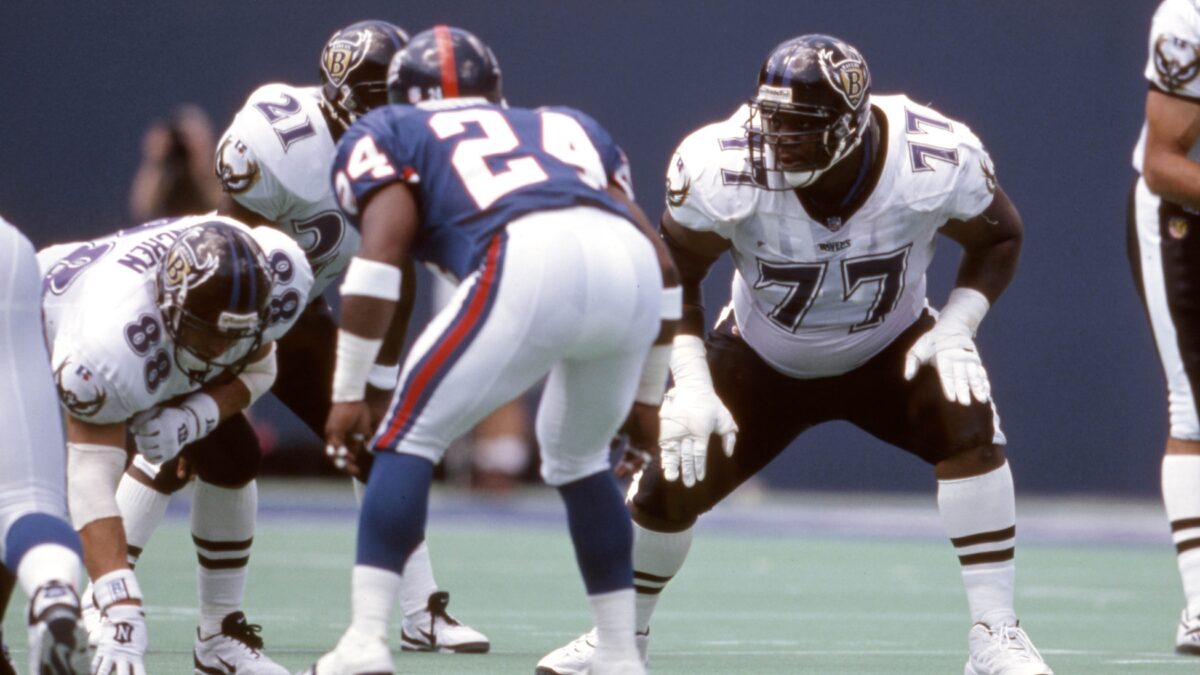
Orlando Brown signed with the Cleveland Browns as an undrafted free agent in 1993 and immediately became a starter in 1994. He spent the first two years of his career in Cleveland before relocating with the team to Baltimore in 1996. Brown was a ferocious offensive lineman who quickly became one of the highest-paid linemen in the league. In 1999, Brown signed a free agent deal to return to the newly reformed Cleveland Browns.
Yet 1999 would not be a banner year for Brown. During a game against Jacksonville, referee Jeff Triplette accidentally hit Brown in the right eye with a weighted penalty flag. As a result of the errant flag, the hulking offensive lineman suffered from temporary blindness and was forced to miss 3 seasons.
After suing and settling with the NFL and spending over two years in rehab, Orlando Brown miraculously returned to the field of play in 2003. Prior to that season, Brown was re-signed by the Baltimore Ravens, where he went on to play an additional 3 years.
Priest Holmes – Kansas City Chiefs
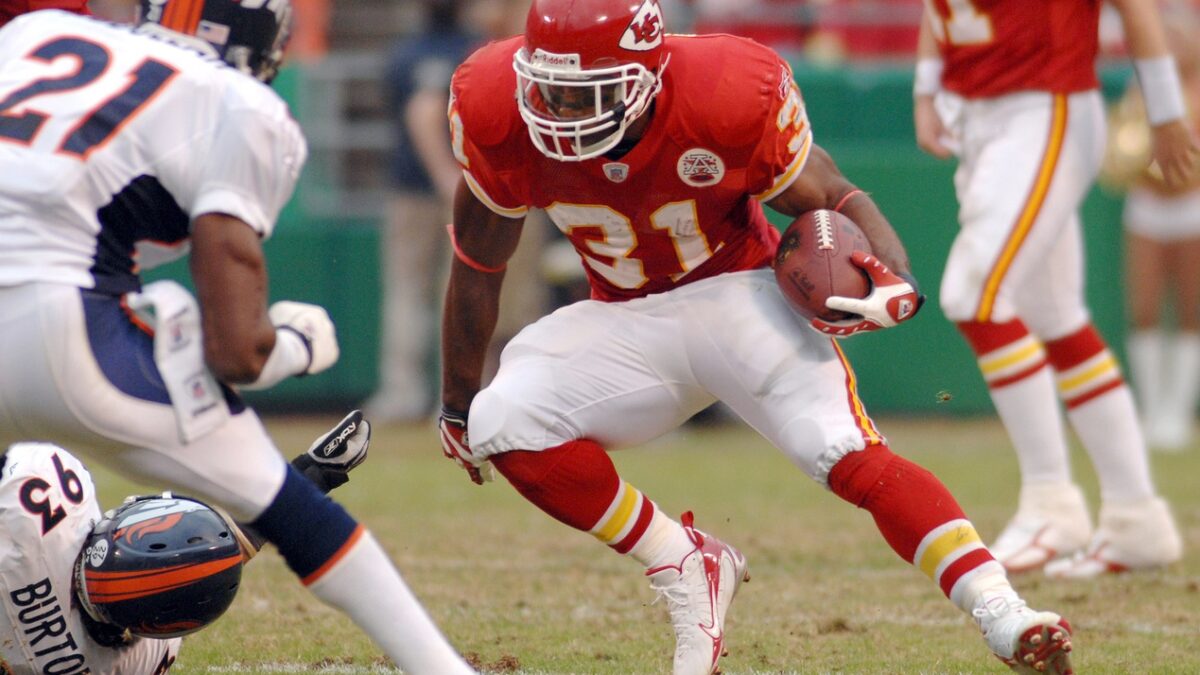
It’s easy to forget just how good a running back Priest Holmes was. Holmes was an undrafted free agent signed by the Baltimore Ravens in 1997. Despite surpassing 1,000 yards rushing in 1998, his first full season, Holmes would really make a name for himself after signing a deal with the Kansas City Chiefs.
The 2001 season was the first of 3 straight 1,000-yard rushing seasons for Holmes, with season totals of 1,555, 1,615, and 1,420 yards. He also led the league with 27 rushing touchdowns in 2003. A star was being born. Unfortunately, injuries started to pop up in the 2004 NFL season, but it was the injury suffered in 2005 that put Holmes’ career in jeopardy. Holmes’ season ended early when he suffered a spinal column injury after being tackled.
The running back sat out the entire 2006 season but reported to Chiefs training camp in 2007. He remained on the non-football injury list until October, when he made an unlikely return to the field. Holmes would play 4 games in 2007 before another injury, this one to his neck, led to his retirement.
Jack Youngblood – Los Angeles Rams
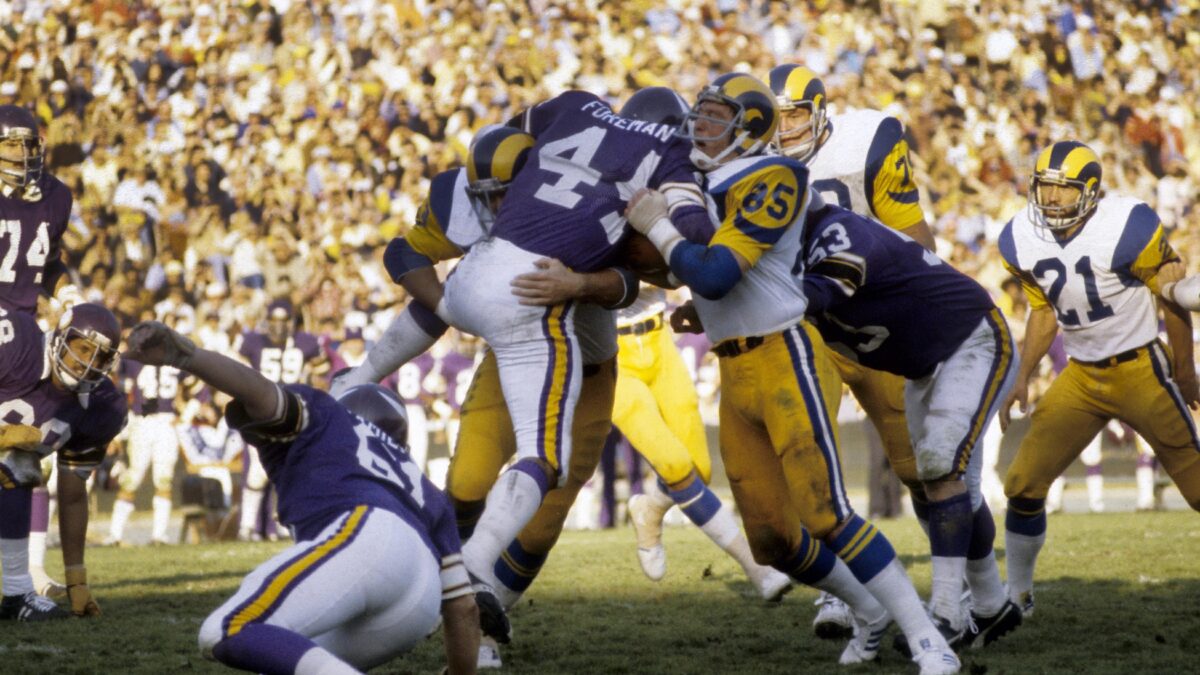
If you were to look up the word “beast” in the dictionary, you just might see a picture of Jack Youngblood. Let’s be honest, the injury that Youngblood suffered in 1979 might not be as devastating an injury as some of the other players on our list, but it’s what he did with that injury that earns the defensive end a spot on our list.
Drafted in the 1st Round of the 1971 NFL Draft by the Rams, Youngblood would go on to earn 7 Pro Bowl nods, be a 5x All-Pro, be named to the Hall of Fame All-1970’s Team, and be inducted into the Hall of Fame in 2001. He was also one of the most feared defensive players ever, finishing his career with 151.5 sacks. During the 1979 playoffs, Youngblood suffered a fractured fibula in the Divisional Round against the Cowboys.
Despite the injury, Youngblood refused to come out of the game. He then continued to dress and play in the NFC Championship against the Buccaneers and in the Rams’ Super Bowl loss to the Steelers. Playing in three games with a broken leg wasn’t enough for Youngblood, as he also played in the 1979 Pro Bowl game. Beast!


