

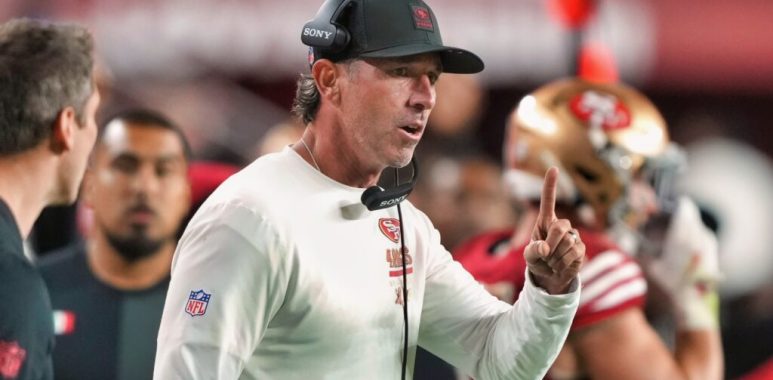
Kyle Shanahan Suspected Of “Breaking The Law” During Near-Fatal Crash — New Report Reveals Who Was “At Fault”
This article was originally published on Total Pro Sports.

New records have come to light following San Francisco 49ers head coach Kyle Shanahan’s serious car accident.
Shanahan suffered a severe concussion, a broken nose, three fractured ribs, a broken left hand and facial lacerations requiring more than 40 stitches in the July 14 crash. He has since returned to 49ers training camp in a limited capacity while continuing to recover.
Niners podcast host Tony Farmer has shared posts pointing to public collision records that indicate Shanahan was holding a cell phone at the time of the incident. The records also list the other driver as the at-fault party in the collision.
The posts claim Palo Alto police did not publicly disclose the cell phone detail and chose not to issue Shanahan a citation.
Those claims are based on publicly available California collision records first highlighted by 49ers reporter Grant Cohn. They were later confirmed by multiple news outlets.
Alcohol & Drugs Not A Factor In Kyle Shanahan Crash
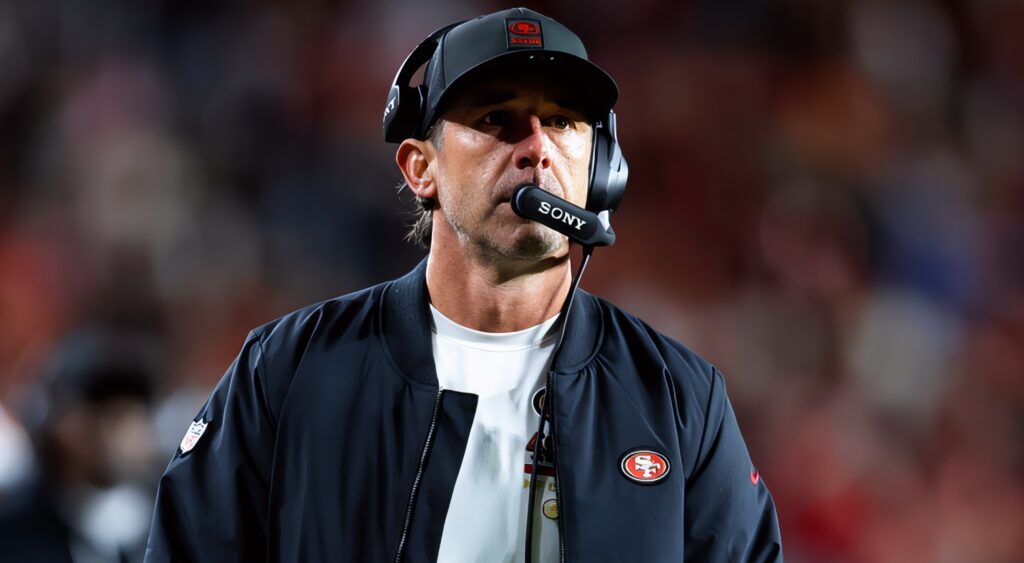
According to the state crash database, Shanahan’s driver record includes the notation “CELL PHONE HANDHELD IN USE.” It references California Vehicle Code 23123.5(a), which prohibits drivers from holding and operating a handheld phone while driving. However, no citation was issued.
The same records identify the primary collision factor as an unsafe turn by the other driver, a 21-year-old woman driving a Mercedes SUV. Public records list her as the at-fault driver, while also noting that both drivers wore seat belts and both vehicles’ airbags deployed. Alcohol and drugs were not factors.
Those details differ from the Palo Alto Police’s initial public comments. At the time, the department said neither driver was cited and declined to release information.
The newly reported phone detail does not establish that Shanahan caused the crash. Likewise, there is no evidence that police attempted to conceal the information. The collision records simply contain additional information that was not included in the department’s initial public statement.


